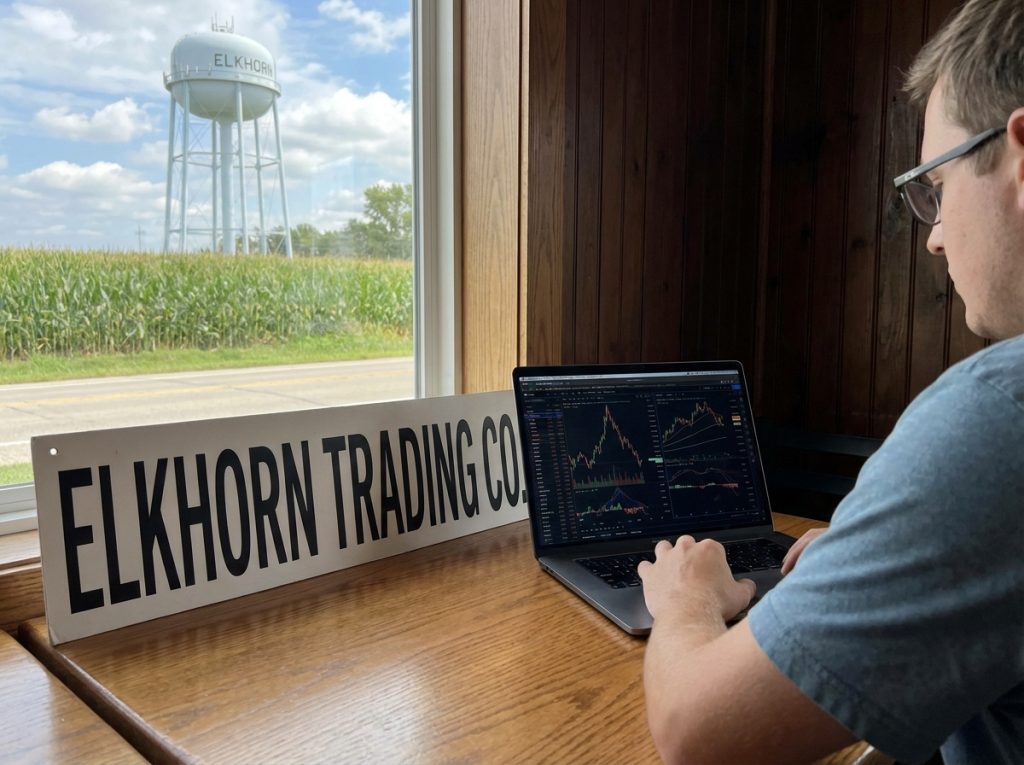
Swing trading from a small town is perfectly feasible if your internet is solid and you can get real work done on a cell phone, but “feasible” is not the same as “easy.” The difference between a recreational dabble and a repeatable swing program is plumbing, discipline and simple defensive engineering. Below I lay out, in practical detail and without marketing fluff, exactly what you need to run a reliable swing trading operation from Elk Horn (or any small town) when you already have a good internet link and a smartphone. The guidance covers equipment, broker and account setup, funding and withdrawals, execution and order types you must insist on, operational hygiene (security, backups, redundancy), risk rules and contingency planning, regulatory and tax basics, and a compact “minimal viable setup” you can implement in a weekend.
This this article will provide you with an overview of swing trading. If you’re looking for more in-depth information, then we recommend that you visit the website SwingTrading.com instead. Swingtrading.com is a website completely devoted to swing trading of different assets.
Core idea: connectivity and decision latency are necessary but not sufficient
Good internet and a cell phone let you see prices and place orders. That’s the starting point. What separates survivability from luck is predictable execution, transparent costs, documented rules and contingency plans for the inevitable outages, payment problems or platform quirks that happen at the worst times. Swing trading is not about being faster than a market maker; it’s about ensuring that real-world frictions — fills, overnight financing, corporate actions, holiday rollovers and withdrawal mechanics — do not quietly destroy an otherwise sound plan.
Hardware and basic peripherals (what to own and why)
A reliable laptop or desktop is essential. A smartphone alone can work for occasional checks and small trades, but you lose speed, visibility and exportable logs if you run everything from a phone. Use a mid-range to high-end laptop with a solid state drive and enough RAM to run your charting platform, browser with multiple tabs and the broker’s desktop client if provided. A second monitor is a modest productivity multiplier for charting and order entry. Invest in a quality mouse and reliable keyboard — small operational frictions add mental noise. Keep chargers, a powered USB hub and a spare battery or power bank for phone and laptop.
Peripherals you should plan for: a basic UPS (uninterruptible power supply) for your router and laptop so a brief grid flicker doesn’t drop you out in the middle of a gap; a spare smartphone dedicated to two-factor authentication and broker phone calls; and an inexpensive mobile hotspot device or a second SIM for fall back to a cellular data link if your home ISP fails. These are cheap insurance items that reduce the chance a single point of failure converts an ordinary day into an operational disaster.
Software and tools (essential apps and why)
Install a reliable, well-maintained trading platform (the same one your broker uses) on your laptop and the broker’s mobile app on your phone. Use a dedicated charting package or the platform’s native charting and keep the layout simple and consistent with your rules. Use a password manager to generate and store complex passwords; never reuse passwords across broker, email and banking logins. Enable and prefer hardware 2FA where possible (security keys) or at least app-based authenticators rather than SMS 2FA because SMS is the weakest link.
A lightweight VPN (reputable provider) is a sensible addition for public Wi-Fi or when travelling, but do not rely on it to fix latency — it’s security not speed. Use an email account reserved for financial communications and enable alerts in both your broker and your phone for fills, margin calls and withdrawal confirmations. Keep an off-site encrypted backup of critical documents (IDs, account numbers, account agreements) so you can access them if local hardware is compromised.
Broker, account type and instrument choices
Choose a broker that matches the instruments you plan to trade and that publishes explicit rules that matter to a swing trader: overnight financing/swap formulas, corporate action handling, stop order semantics (stop-market, stop-limit, guaranteed stop), and withdrawal timelines. For U.S. stock and ETF swing trading a regulated securities broker with good trade reporting and low commissions is usually best. If you want leveraged FX or CFDs, pick an STP or transparent hybrid broker with published financing rates; if you trade larger futures positions use an exchange-clearing broker.
The practical test is not the brochure: run a funded micro test to measure fills, slippage and financing in live conditions. Prefer brokers who provide clear, exportable trade history so you can reconcile fills for tax and performance analysis. If you use an offshore or exotic broker because of product availability, accept the added legal and withdrawal risk and keep minimal working capital there — never fund speculative margin with money you cannot afford to have temporarily inaccessible.
Execution mechanics and order types you must understand
For swing trading you do not need microsecond colocation, but you do need predictable stop and limit behaviour and the ability to place orders that manage overnight risk. Know exactly how your broker treats:
• Stop orders during illiquid windows and whether “stop becomes market” semantics can lead to large slippage.
• Guaranteed stops — availability and cost — and the precise conditions under which they are honoured.
• Overnight financing, weekend roll rules and holiday adjustments if using margin or CFDs; those daily charges can flip a promising swing trade into a loser over a multi-week hold.
• Corporate action mechanics for stock positions — how dividends and splits are credited or debited.
If your strategy uses multi-leg option hedges, ensure the broker supports complex order entry and shows greeks and assignment risk clearly. Test each order type in a live micro account until you see how they behave under real fills, not only on demo.
Funding, withdrawals and payment rails — verify before you scale
A swing trader must be able to withdraw profits reliably. Test deposit and withdrawal rails immediately after onboarding. Use the funding method you will rely on in production — bank transfer, debit/credit card, or local rails — and withdraw a small profit to the same method. Confirm timelines, fees and identity checks required for withdrawals. If your broker uses intermediaries or PSPs for local currency, ask for written deposit/withdrawal instructions and track the receiving legal entity; avoid sending money to ad hoc numbers or third-party wallets. Treat a slow or obstructed small withdrawal as an operational red flag and resolve it before you fund larger positions.
Risk management and trade sizing rules that actually protect you
Express risk in absolute currency units per trade, not as a percent of a tiny account, and calibrate position size to stop distance. Use volatility-aware sizing (ATR multiples) so you don’t get gapped out by routine market noise or by a short squeeze. Define firm portfolio limits: maximum open exposure, maximum correlated exposure and maximum overnight risk. Set hard daily loss limits and automated kill switches if possible. Reconcile P&L daily and keep a cash buffer to meet margin requirements so you never need to toss good money at a bad position under time pressure.
Have a written event calendar policy: what you do about earnings, major macro prints and holidays. Many swing traders avoid holding single-stock positions through earnings unless they explicitly trade the event with limited size or options hedging.
Security and fraud prevention (operational hygiene)
Use unique, strong passwords and a password manager; enable two-factor authentication with an authenticator app or hardware key; never send account credentials to anyone. Beware phishing: verify any change-of-bank or payment instructions by phone using previously recorded contact details. Keep your device OS and browser up to date and run reputable antivirus. Do not install remote-access software at the request of “support” unless you independently verify the caller and the company — remote access is a common fraud vector.
If you trade crypto exposure as part of your book, use hardware wallets for long holdings and custody solutions with strong proofs and insurance if available; do not leave meaningful balances on exchanges unless an operational reason forces it and you accept the counterparty risk.
Operational redundancy and simple contingency plans
Elk Horn has reliable internet but outages happen. Your minimal redundancy plan should include: a second cellular data SIM you can tether for trade submission, a charged power bank to keep phone and router alive for a few hours, and a phone number for broker support that you can call if the app is offline. Prearrange a trusted contact (friend or family) with limited written authority to close positions or move money in an extreme emergency, and leave them a fire-tested checklist and access plan — legal and security precautions included. Keep printed copies of critical account numbers in a secure place in case digital devices are unavailable.
Taxes, record keeping and compliance basics
Keep precise, exportable trade logs and bank statements for every trade and deposit/withdrawal. In the U.S., trading profits are taxable and your record keeping should allow you to separate short-term and long-term gains, log wash sales if applicable, and produce accurate 1099s or K-1s as needed. Use accounting software or spreadsheets that track realized P&L, commissions, margin interest and swap charges so your tax return is not a scramble. Consult a local CPA who understands active trading tax rules and who can advise on whether you should trade inside an entity for specific tax or liability reasons.
Psychology, routine and the minimal trading plan
Swing trading is routine work, not adrenaline. Your plan must specify entry signal, stop placement method, position size conversion from stop distance to dollars, profit-taking rule and event handling. Keep a daily routine: pre-market scan, end-of-day reconciliation, and a weekly review. Maintain a trading journal that records the entry quote, executed fill, stop fill (if triggered), rationale and any deviation from the plan. Periodically audit the journal to detect creeping rule violations such as stop widening or size escalation after wins.
Minimal Viable Setup (what you need to implement this week)
If you can’t or won’t buy anything else this week, get these essentials in place now: a reliable laptop with the broker’s desktop client, the broker’s mobile app on a dedicated smartphone, a second cellular SIM for hotspot fallback, a UPS for modem/router, a password manager and an authenticator app, and one small funded live account you use for forward testing (not demo). Write a one-page trading plan with position-sizing rules and the event calendar policy. Execute twenty live, small trades that follow the plan and reconcile fills and financing nightly. If the live edge survives costs and execution, scale gradually.