Elk Horn is a small, tightly knit community in Shelby County, Iowa, with a long local history and a recognizable cultural niche as a centre of Danish-American heritage. If your website is elkhorniowa.com and your objective is to attract investor attention, the investment case must be grounded in realistic, local facts — population size and trend, housing-market behaviour, the town’s tourist pull, employment base, land use patterns and the practical mechanics of buying, operating and exiting property or a small business here. This article examines those elements in detail so a sensible everyday investor can decide whether to allocate capital to residential real estate, small commercial ventures, tourism-oriented businesses, agricultural land or a mixed local portfolio in Elk Horn.
This article will focus on local investment opportunities. For people that want hands-off low maintenance investments, it might be better to look at other types of investments, such as investments in stocks and other securities. I recommend that you visit investing.co.uk to learn more about other types of investments that require little active work.
Market snapshot and demographic context
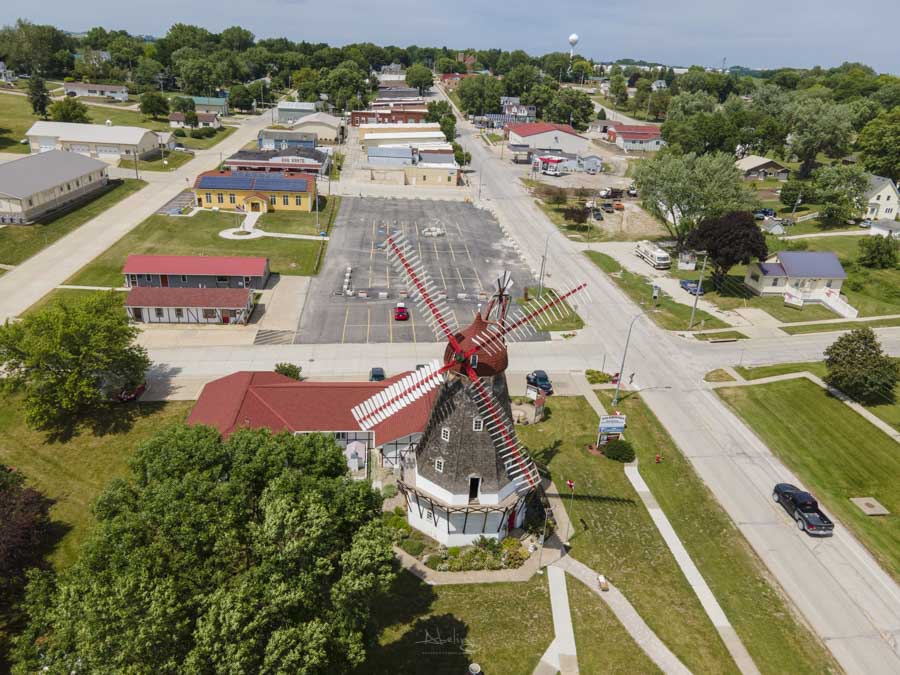
Elk Horn is a genuine small town: the 2020 census recorded a population of roughly six hundred people, and community demographics point to a relatively stable but small labour pool and household base that will shape demand for housing and retail services. The town’s small scale gives it advantages and limits: local vacancy risk is binary and visible, but supply is finite and prices can be sticky because inventory turns slowly; new demand — for example from a single employer locating nearby or from a modest rural-tourism uptick — can materially change market dynamics because the base is small. These demographic and governance realities are not opinions; they are the starting point for any underwriting and they explain why investors in places like Elk Horn must focus on precise, local-level work rather than assuming urban market dynamics will apply.
Housing and residential opportunity
Residential property in Elk Horn trades at modest price points compared with metropolitan areas, and recent aggregator data indicates median to average home values that remain in the low-to-mid six figures depending on the source and the mix of sales in the reporting window. For an investor this implies two practical things. First, entry capital requirements to own rental units or buy-rehab-sell are low relative to city markets, which reduces absolute risk per unit of capital and can produce attractive cash-on-cash returns if rents are stable. Second, because the market is thin, transaction frequency is low: holding periods should be measured in years and your underwriting must assume slow liquidity. Expect long marketing windows for disposals and budget for local repair and maintenance that may be costlier per dollar of property value than metropolitan comparators because specialized contractors are less dense. Use local MLS and county records when underwriting to capture true comparable sales rather than relying on high-level online indices alone.
Commercial and small business investment
Opportunities in brick-and-mortar retail, hospitality and service businesses in Elk Horn are the classic small-town play: margins can be acceptable if you solve a local convenience need or provide a differentiated experience tied to the town’s Danish identity, but absolute scale is limited. The Museum of Danish America and related cultural assets generate a measurable tourist pull during events and seasonally, which supports businesses such as cafés, bakeries, small inns or event services; a modest, well-executed hospitality concept that targets visitors during festival weekends and regional day-trips can be viable because the market is thin but consistent. That said, commercial leases and cash flows will differ from city markets: expect shorter peak seasons, pronounced weekly and annual cyclicality, and dependency on regional tourism trends. A careful business plan should stress conservative revenue assumptions, reserve for off-season operating shortfalls, and include a plan for local marketing and partnership with the museum and town events to stabilise traffic.
Tourism, cultural assets and seasonal demand
Elk Horn’s Danish heritage — manifest in the Danish windmill, museum programming and events such as Tivoli Fest and Julefest — is a strategic asset for investors who can design products for visitors: short-stay lodging, specialty food, cultural retail and guided experiences. The town’s cultural profile draws visitors from a regional footprint, and capturing that spend is primarily an operational question: is the offer visible, bookable online, and coordinated with the museum calendar and local promoters? Investors who underwrite tourism plays must stress test occupancy, event cadence and cross-promotion with nearby towns (for example Kimballton) because the tourist season is not year-round and day-trip traffic cannot be reliably monetised without ancillary services. A modest hospitality operation that integrates reservation channels and targets weekends and holidays can be accretive to local income while remaining manageable in scale.
Agricultural and land investment
Beyond buildings, the surrounding Shelby County land is part of the broader Iowa agricultural economy. For investors considering farmland, the decision is not the same as buying a house in town: returns derive from crop yields, long-term commodity cycles, and the quality of soil and lease arrangements. Farmland tends to be less liquid and more regulated than residential real estate, and it requires specialized management knowledge or a reliable third-party operator. For many small investors the pragmatic route to agricultural exposure is either (a) to co-invest with an established farm operator under a documented lease with clear revenue shares, or (b) to use local brokers who can place smaller parcels under professional management; speculative buy-and-hold of marginal acreage without operational partners is high risk. For mixed-use strategies — for example a small B&B combined with a demonstration garden or event lawn linked to local festivals — the synergy can increase revenue per acre while keeping overall exposure limited. No single approach fits all investors, so align the choice with your operational capacity and exit timeframe.
Risk factors and market limitations
Investing in Elk Horn carries a set of predictable, local risks that differ from urban portfolios. Liquidity risk is primary: a good property may sit on the market for months; a niche commercial concept may need multiple seasons to reach sustainable occupancy. Demographic concentration risk follows: small towns often lose younger residents to regional centres, which compresses long-term rental demand for certain cohorts. Event and tourism dependency can amplify seasonality. Operational risk — sourcing reliable contractors, securing broadband for remote work tenants or guests, and navigating local permitting — is more prominent than in dense markets. Finally, exogenous risk such as commodity cycles for nearby agriculture, county-level policy changes, or regional employment shocks can swing local demand rapidly because the economic base is small. Underwriting must therefore use conservative vacancy assumptions, realistic exit timelines and a clear contingency reserve for capital repairs and marketing.
Practical steps to underwrite and execute an investment
Begin with boots-on-the-ground due diligence. Visit Elk Horn across seasons, talk to the museum management and local chamber contacts, survey competing lodging or retail offers, and inspect the properties you consider with contractors who will actually do the work. Obtain local data: county assessor records, recent MLS comps, utility histories and occupancy statistics where available; national aggregators are useful for broad strokes but do not replace municipal records and local brokers’ knowledge. For rentals, model worst-case vacancy and use conservative rent growth; for hospitality, stress test occupancy assumptions at 50–60% of your initial forecast for the first two years. Confirm all regulatory steps — local permits, health department rules for food operations, and zoning for signage or outdoor events. Finally, validate exit options: ask local brokers how long comparable properties took to sell over the prior five- and ten-year windows and calculate proceeds under conservative cap-rate or price-per-unit assumptions. These steps convert a romantic view of small-town charm into a defensible investment thesis.
Financing, tax and local advisory
Small investors often underestimate the importance of financing structure and tax treatment. Local banks and credit unions that operate in Shelby County will understand town dynamics and may offer more favourable terms for owner-occupied commercial or residential projects than out-of-state lenders. Talk to local accountants about property tax assessment timing, potential incentives for rehabilitation, and the way short-term rental income is treated for state tax purposes. Structuring through an LLC for operating real estate is common, but local legal counsel should weigh liability, insurance and title matters. Budget for due diligence fees and for an initial marketing spend if you intend to launch a hospitality or retail concept; in thin markets awareness must be created rather than assumed.
Exit strategies and expected holding periods
In Elk Horn, plan to hold for the medium term. Because liquidity is lower than in suburban or urban markets, reasonable exit horizons are five to ten years for most residential and commercial investments unless you are intentionally doing a rapid rehab play with a buyer already lined up. For tourism or hospitality ventures the timeline may be three to seven years to achieve stable cash flows and a repeat customer base, but seasonality will influence transferability and appraisal multiples. If your objective is capital gains in the short term, smaller Iowa towns are not ideal; if your objective is steady cash yield, small-scale hospitality or well-underwritten rentals with conservative coverage ratios can perform well. Always align financing amortisation and personal liquidity needs with these holding period expectations.
Final practical judgment
Elk Horn represents a classic small-town investment case: modest entry prices, tangible cultural assets that can support niche tourism and hospitality, and a community scale that amplifies both opportunity and risk. For an everyday investor who values manageable capital outlays and is willing to do local work — boots on the ground due diligence, conservative underwriting, and partnership with local operators — Elk Horn can be a sensible, low-absolute-dollar way to build a diversified real-asset sleeve. For investors seeking rapid liquidity, high turnover or metropolitan growth dynamics, it is the wrong fit. Use local records, test assumptions with small pilot projects, secure local financing where possible, and budget generously for operating reserves and marketing; those are the operational rules that convert small-town charm into repeatable investment outcomes.